
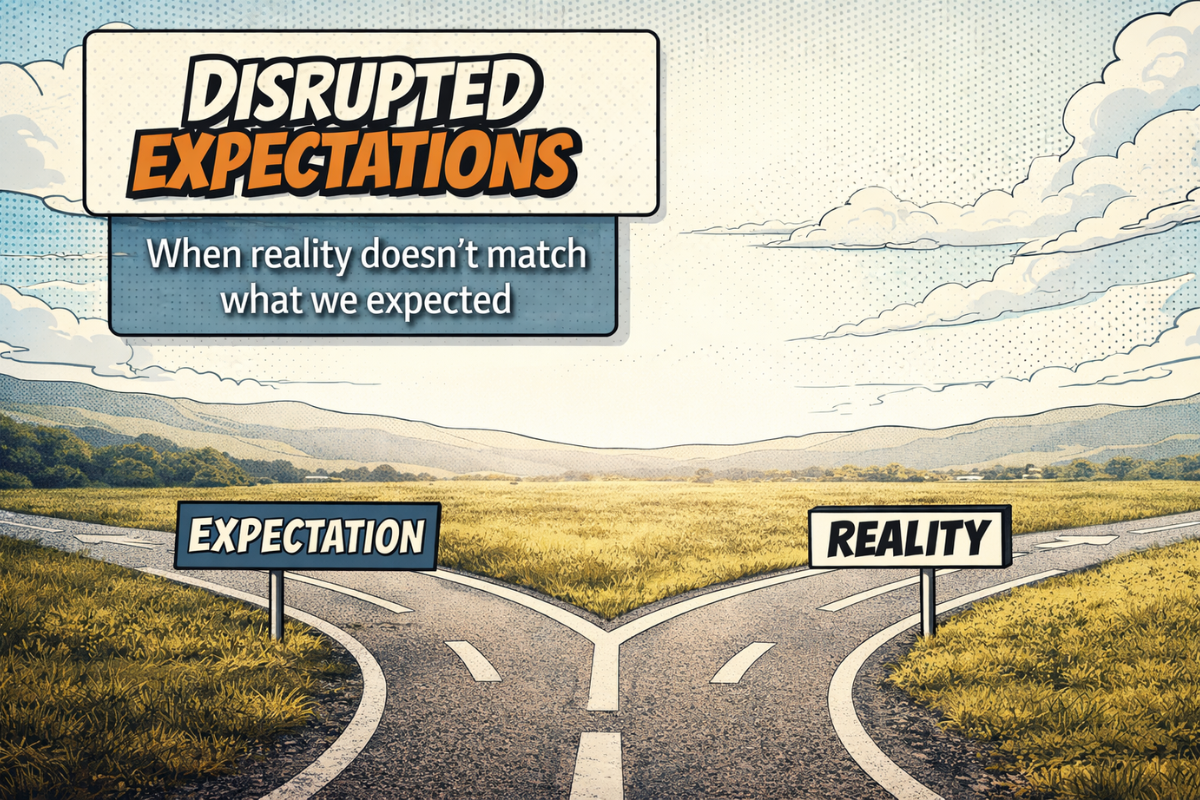
Disrupted Expectations: The Moments That Shape Our Response
Sometimes it’s not what happened that throws us off…
it’s that it didn’t happen the way we expected.
I recently delivered a workshop at a blood donor centre on a topic called Difficult Donors.
In the room were donor staff and their manager — people who show up every day to support others, often in emotional moments.
One of the key challenges they shared was how uncomfortable it can feel when they have to turn a donor away.
From the donor’s perspective, they’ve made the effort to come in, they’re ready to help, and then suddenly… they’re told no.
That moment — right there — is a disrupted expectation.
And as we spoke about it, you could feel a shift in the room.
Not because the situation changed.
But because the understanding did.
What is a disrupted expectation?
At its simplest: A disrupted expectation is when reality doesn’t match what we expected.
It sounds simple.
But it shows up everywhere.
And it often carries emotion with it.
Where this shows up in everyday life
You don’t need to be in a blood donor centre to experience this.
It happens all the time.
A colleague reacts differently than you thought they would
A child doesn’t listen after you’ve clearly explained something
A patient or client responds in a way you didn’t expect
An umpire makes a call that doesn’t go your way
In each of these moments, there’s a gap between what we expected… and what actually happened.
And it’s in that gap where emotion lives.
Frustration.
Confusion.
Disappointment.
Sometimes even anger.
Why these moments matter more than we think
The disrupted expectation itself isn’t the problem.
Our reaction to it is.
Most of the time, we don’t realise what’s just happened.
We go straight into:
reaction
judgement
assumption
And before we know it, a small moment turns into a bigger one.
A moment that caught me off guard
I remember taking my son to his community kinder.
We’d been told his kinder day was still going ahead, even though there were talks of a curriculum day at the deaf school.
I drove him there after an appointment, got to the door… and was met with a confused staff member.
“Why are you here?”
Turns out, the kinder was open for community kids, but not for the deaf and hard-of-hearing children, as their teachers weren’t present.
Expectation: Kinder is on.
Reality: Kinder is not on.
Disrupted expectation.
It threw the day off.
It created confusion.
But after a moment to pause, I was able to reframe it.
We turned it into a dad-and-son day.
Caught up with my wife for lunch.
Went for a bike ride.
Slowed things down.
Same situation.
Different response.
So, what can we actually do in these moments?
Here are three simple tools you can use straight away.
1. Your first word should be a breath
Before reacting… pause.
Even just for a second.
That breath creates space between what just happened… and how you respond
It’s small.
But it changes everything.
2. Choose curiosity over judgement
Instead of:
“Why would they do that?”
“That makes no sense”
Try:
“What might be going on here?”
“What am I missing?”
Curiosity lowers emotion.
Judgement fuels it.
3. Reframe the situation
Ask yourself:
“Is there another way to look at this?”
Sometimes there is.
Sometimes there isn’t.
But even asking the question helps shift your mindset.
Just like that day with my son — the situation didn’t change, but the outcome did.
Why this matters
Disrupted expectations happen to everyone.
Every day.
In small moments.
In big moments.
At work.
At home.
In sport.
In life.
We can’t control when they happen.
But we can control how we respond.
And often, that response shapes everything that comes next.
A reflective pause
When was the last time your expectations were disrupted?
What did you do in that moment?
And what would have changed if you had paused, got curious, or looked at it differently?
If you feel comfortable, share your experience, you never know who it might help.
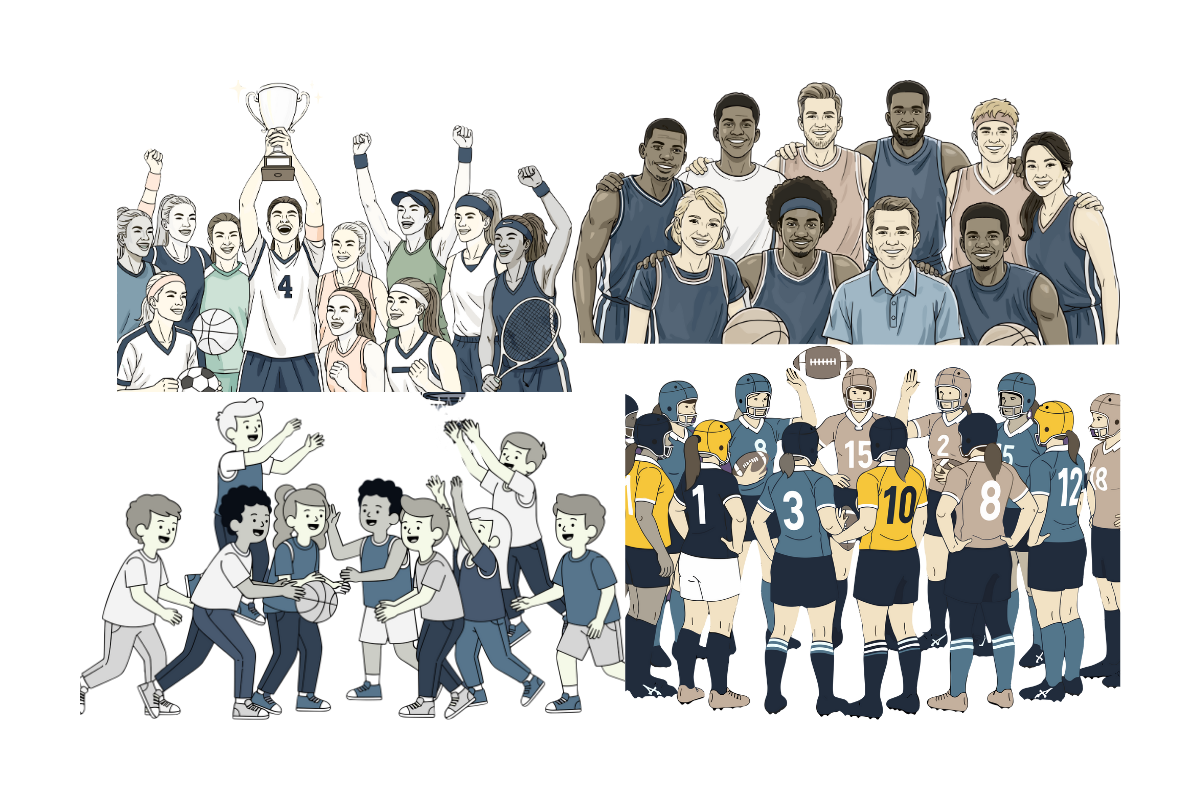
Sporting Clubs, Leadership, and the Human Skills That Shape Communities
I’ve grown up in and around sporting clubs.
Some of my earliest memories are tied to clubrooms, muddy boots, shared laughs, and the sense of belonging that comes from being part of something bigger than yourself.
Sporting clubs are special places.
They bring together people from different backgrounds, ages, and life experiences, and give them a shared identity. For many kids, teenagers, and even adults, a club becomes a second home.
They allow people who’ve come from different places and different walks of life to feel like they belong.
And that’s exactly why sporting clubs matter so much.
The influence senior leaders hold
One of the most powerful things about sporting clubs is that young people are always watching.
They watch how senior players speak to teammates.
They watch how coaches respond under pressure.
They watch how committee members, parents, and supporters behave on the sidelines.
Whether we like it or not, senior players, coaches, and long-standing club leaders are shaping what is seen as acceptable behaviour.
Not through speeches.
But through what they tolerate.
What they excuse.
And what they quietly ignore.
This is where responsibility really sits.
When leadership isn’t emotionally aware
Here’s where it gets uncomfortable.
What happens when the people in leadership positions aren’t emotionally aware themselves?
When:
abuse toward umpires is brushed off as “passion”
discriminatory comments are minimised
white-line fever crosses the line
anger is normalised because “that’s just competitive sport”
Who calls that out?
And more importantly…
What are younger players learning in those moments?
Sport is emotional. It should be.
But emotional doesn’t have to mean unsafe, disrespectful, or harmful.
What does calling someone out with care actually look like?
Calling someone out doesn’t have to be about saying, “You’re wrong.”
Often, it’s as simple as using the club’s own values and standards.
Something like:
“Hey, that’s not how we do things around here.”
It sends a clear message:
To be part of this club, certain behaviours aren’t acceptable.
And when people on the outside see that line being held, it builds trust.
It shows the club stands for something.
It strengthens culture instead of quietly weakening it.
When silence causes more damage
We’ve all seen it.
A parent losing it at an umpire.
A player abusing a teammate after a mistake.
A spectator pulling their child aside for a spray.
Most of the time, people turn a blind eye.
We label it as, “That’s just how they are.”
Or we avoid it because we think, “It could get ugly.”
But silence can do more damage in the long run.
Sometimes, a simple question like:
“Hey, are you OK?” can change the entire direction of a situation.
It shows curiosity instead of confrontation.
Care instead of control.
And it opens the door to a conversation instead of a standoff.
The behaviours that stick with you
I grew up in cricket and baseball clubs.
One thing that’s always stayed with me is post-game presentations when I was about 11. Coaches would stand up and talk about the game, focusing on what the team did well. At my junior cricket club we’d have a player-of-the-match award, but it wasn’t always about runs or wickets.
Sometimes it was for:
positivity
sportsmanship
mindset
effort
And yes, the good old McDonald’s voucher.
Parents would celebrate with the kids.
Kids would talk about their game.
Confidence grew.
I’m nearly 40 now, and those are still the memories that stand out.
I think that’s what most of us want for our kids.
And when things don’t go so well
Last season, I went to my nephew’s under-9s footy game.
Midway through, the umpire made a call. It looked like one of those junior footy decisions made to help kids learn and stay involved.
A parent from the opposing team went ballistic.
The umpire stopped the game and said the behaviour wasn’t acceptable and that he would forfeit the match if it continued.
What impressed me most was what happened next.
Both coaches backed the umpire.
Leaders from both clubs supported the decision.
The parent eventually stepped away, settled down, and after the game, apologised to the group.
The coach shook his hand and thanked him for it.
That moment mattered.
Not because it was perfect.
But because the line was held, and the situation was repaired.
How small habits shift club culture
One small behaviour shift can change the tone of an entire club.
It often only takes two or three respected leaders to say:
“This is what we accept here. And this is what we don’t.”
My own senior cricket club president does this well. He’s a police officer by trade and has very clear boundaries about behaviour. Long-time members of the club back him, and because of that, standards hold.
Culture doesn’t change through policies alone.
It changes through what people model and protect.
A reflective pause
Sporting clubs have an incredible ability to build confident, connected, resilient human beings.
But that only happens when the people with influence are willing to look at their own behaviour first.
Not to be perfect.
But to be aware.
So here’s a question worth sitting with:
If a young player learned how to behave by watching the adults at your club…
what would they learn about respect, emotion, and belonging?
Because in sporting communities, leadership isn’t just about winning games.
It’s about what people carry with them long after the final siren.
Emotional Intelligence Isn’t Magic. It’s Trainable.
Emotional intelligence often gets talked about like it’s a personality trait, something you’re either born with or not.
It’s not.
Emotional intelligence (EQ), communication, resilience, motivation, these are learned skills. They grow the same way physical strength does: with reps.
No one walks into the gym and deadlifts 100kg on day one.
No one picks up a guitar and plays a full song perfectly the first try.
Yet people walk into a difficult conversation and expect it to go smoothly, even if they’ve never practised how to:
regulate emotion
listen properly
challenge respectfully
communicate clearly under pressure
That expectation sets people up to fail.
Human skills need the same respect we give “hard skills.”
They need time, repetition, feedback, failure, and a growth mindset.
So what does emotional intelligence actually mean?
At its core, emotional intelligence is the ability to:
recognise what you’re feeling
understand how it’s influencing your behaviour
manage it well enough to respond rather than react
It’s not about being calm all the time.
It’s about noticing what’s happening before things escalate.
What’s the most basic element of emotional intelligence?
Awareness.
Before regulation.
Before empathy.
Before communication.
Awareness of:
your tone
your body language
your internal state
the impact you’re having on others
If you don’t notice it, you can’t change it.
What does emotional intelligence look like in real life?
Let’s make this practical.
For tradies
A job is behind schedule. Pressure’s high. Tempers are short.
Low EQ looks like snapping, blaming, or shutting down communication.
High EQ looks like recognising frustration early and saying:
“I’m getting frustrated here, let’s slow this down so we don’t miss something.”
That one sentence can prevent mistakes, rework, safety issues, and damaged working relationships.
For childcare educators
You’re managing children, families, routines, regulations all while running on limited energy.
Low EQ looks like bottling stress until burnout hits.
High EQ looks like noticing overwhelm early and asking for support before it spills into interactions with children or colleagues.
That protects relationships and wellbeing.
For healthcare workers
High-stakes environments. Emotionally charged situations. No pause button.
Low EQ isn’t about being a bad clinician, it’s about being human under pressure.
High EQ is recognising when stress is driving your responses and grounding yourself, so communication stays clear, calm, and safe.
That skill can change outcomes for patients, families, and teams.
For sporting clubs
Games are intense. Emotions run high. Decisions happen fast, often in front of teammates, opponents, umpires, and supporters.
Low EQ shows up as:
blowing up at an umpire
snapping at teammates
carrying frustration into the next play
letting one mistake spiral into many
High EQ looks like:
recognising the emotional spike and resetting quickly
refocusing on the next contest instead of the last mistake
communicating calmly with teammates under pressure
modelling composure, especially when others are watching
In club environments, emotional intelligence doesn’t just affect performance, it shapes culture.
Players with strong human skills help create teams that stay connected when things aren’t going well, support each other through losses, and hold standards without tearing each other down.
That’s leadership, whether you wear the captain’s armband or not
Why this matters across every industry?
Most people don’t struggle with the technical parts of their job.
They struggle with the human parts.
And yet, we rarely practise them.
We don’t rehearse difficult conversations.
We don’t train emotional regulation.
We don’t normalise feedback on communication.
Then we wonder why things fall apart under pressure.
You’re allowed to get it wrong.
You’re expected to get it wrong.
You just need to keep trying, with intention.
That’s how emotional intelligence is built.
A question worth sitting with
If emotional intelligence were trained the same way technical skills are in your industry…
What would improve first?
Safety?
Communication?
Culture?
Wellbeing?
A Different Way to Think About the New Year
In this blog I felt like a good opportunity to pause, not to reinvent anything, but to offer a slightly different perspective as we head into a new year.
My goal with these blogs has never been to reinvent the wheel for you. I’m not here to tell you what to do or how to live your life. I’m simply offering another way of looking at things.
If one idea, one sentence, or one reflection helps you improve even one aspect of your life or communication that’s a win for me.
Looking Ahead Without the Pressure
I’ve never been a big fan of New Year’s resolutions.
Not because goals are bad, but because so often they’re framed in a way that sets people up to feel stuck or disappointed when motivation fades.
Instead of focusing on what you want to achieve this year, I’ve been thinking more about who you want to become.
For example, someone might say they want to run a marathon. They train, they complete it, and then what?
But if that same person sees themselves as a runner, the marathon becomes part of a longer story. They keep running, improving, and finding new challenges because it’s now part of their identity.
The same applies to learning a skill. You might want to play one song on the guitar, but once you do, motivation can disappear. When you see yourself as a musician, you keep showing up, practising, and growing.
This year, I’m more interested in identity than outcomes.
How I’m Approaching the Year Ahead
One thing I’m intentionally leaning into this year is being a bit more active in the social media space.
Not to chase numbers or trends, but to provide value.
I want to help people:
Think a little differently about communication
Recognise and understand their emotions better
Step into leadership, whether that’s at work or at home
Leadership isn’t always a title. Sometimes it’s simply how you show up in a moment.
A Lesson From Community
One of the biggest learnings I’m taking into this year has come from the Skool communities I’ve been part of.
What’s stood out is how powerful learning becomes when it’s shared.
People from all over the world, with different backgrounds and experiences, showing up with curiosity, generosity, and honesty. Human skills are learned best together, through conversation, reflection, and real examples.
That’s shaped how I want to show up this year too.
Choosing to Be a Life Learner
If I had to name the identity I’m leaning into, it would be a life learner.
I enjoy listening to podcasts, reading books, learning from others, and leaning into the knowledge of people around me, especially within my community.
The real value for me is then taking what I learn and simplifying it.
Breaking it down.
Making it practical.
Making it easy to digest.
So, you don’t have to do all the research yourself.
A Note on Confidence (Because It Matters)
Confidence is something people often tell me they want more of.
But confidence isn’t something you wake up with one day.
It’s built after action.
Confidence comes from:
Setting a boundary; even when it feels uncomfortable
Having one difficult conversation
Speaking up once when you normally wouldn’t
It’s the accumulation of small, uncomfortable moments, repeated over time.
That’s why my goal across all my platforms is to offer simple, practical tasks, small enough to try, real enough to matter.
If you take those micro-opportunities throughout the year, confidence builds quietly in the background.
One Word I’m Carrying Forward
I was asked recently what one word I’d use to describe my goal for the year.
The word I chose was meaningful.
I want to connect with as many people as I can in meaningful ways, whether that’s sharing a laugh, building new relationships, or exchanging experiences and ideas.
That’s what matters to me.
A Gentle Invitation
As you step into this year, maybe ask yourself:
Who do I want to become?
What identity do I want to lean into?
What’s one small action that reflects that?
You don’t need to overhaul your life.
You just need to start and give something.
A Moment to Pause, Reflect, and Say Thank You
Pause Reflect and Thank-You
As the year comes to a close, I wanted to take a moment to slow things down.
Not to rush into goals, plans, or big declarations for next year, but to pause and reflect on what’s already happened.
If you’ve stopped by and read one of my blogs this year, thank you.
Truly. It means more than you probably realise.
If something I’ve written resonated with you and you’ve shared it with someone else, that means the world to me. These reflections only matter if they help someone pause, think, or feel a little more connected.
So before the year wraps up, here’s a look back at the wins, the learnings, and what I’m carrying forward.
The Wins Worth Noticing
This year, I created Dan Hall Co, something that started as a quiet idea and slowly became real.
I was fortunate to deliver Human Skills workshops to over 250 people across the Melbourne area, creating space for conversations around communication, emotional intelligence, leadership, and connection. Seeing people pause mid-session, reflect, and have those “ah-huh” moments never gets old. That’s the part of the work that lights me up.
One moment that made me especially proud happened during an Emerging Leaders Day.
While I was introducing the session, a young nurse raised her hand and said, very honestly:
“I don’t think I should be here. I’m not a leader.”
I walked over and asked her a simple question.
“When a patient deteriorates in your care and you press the alarm for help, and everyone arrives… who do they turn to first?”
She paused.
Then, a little sheepishly, she replied,
“Me?”
I smiled and said,
“So in that moment, you were the leader.”
“I guess so?”
“So why wouldn’t today be for you? You’re exactly the person who should be here.”
Her face lit up.
From that moment on, she flourished. She leaned into the activities, contributed openly, and genuinely enjoyed the day. At the end, she came up to thank me for what she called the “pep talk.”
It was a reminder that so many people are already leading, quietly and responsibly, without ever being told they are.
Leadership isn’t always loud.
Sometimes it’s simply being the one people turn to when it matters.
Another highlight this year was working with an electrician who initially struggled to see the value in so-called “soft skills.” Over time, that shifted. He began noticing his emotional responses, communicating more clearly, and even improving how he showed up at home with his wife, kids, and colleagues. Watching skills transfer from work into real life is incredibly rewarding.
I also created a Skool community, bringing together people from around the world who care about connection, communication, and growth. Slowly and intentionally, we’re building a culture focused on one simple idea: Make Human Skills Matter.
The Learnings That Shaped Me
Creating your own business is hard work.
All the little things you don’t think about at the start show up very quickly. Systems, structure, energy, doubt, it all becomes real. But it’s also been one of the most rewarding experiences of my career. I’ve developed skills I never expected to need, and I’ve loved every minute of it, especially witnessing those “ah-huh” moments in clients and audiences.
Motivation hasn’t always been easy.
Some days, starting a draft email felt like a win. Some days, even opening the laptop, or getting out of bed took effort. What I’ve learned is that making tasks smaller matters. One sentence. One action. One ticked box. Most of the time, that small step creates momentum. And even when it doesn’t, it still counts.
Consistency hasn’t meant giving 100% every day.
There were days where I only had 20% to give, and that’s okay. Being human means some days are lighter than others. Doing one thing is still progress. It’s one less thing for tomorrow. Showing up a little each day accumulates into something far bigger over time, you just have to start.
The Support That Carried Me Through
I’d be remiss not to acknowledge the person who supported me most when things felt heavy.
My wife, Nicole.
Over the past 12 months, she has been there in every way, reading drafts of my posts, offering encouragement, grounding me when doubt crept in, and putting up with me on days when life felt tough.
Like most families, we’ve been tested at times while balancing kids, work, business, family life, and our dogs. It hasn’t always been smooth. But we’ve worked through it together.
Her support has been steady, honest, and deeply human and I’m incredibly grateful.
Thank you, honey. I love you.
Looking Ahead to What Matters Most
Next year, my biggest goal is more family time.
I’ve reshaped both my nursing work and my business so I can be more present at home. I once had a senior colleague tell me his kids remembered him always working, and that stayed with me.
I don’t want that for my kids.
I want them to remember morning coffees before school,. days at the footy, ice-cream dates, the good stuff.
At the same time, Making Human Skills Matter remains something I’m deeply passionate about.
Since COVID, many of us have become more inward. More hesitant. More worried about saying the wrong thing. But relationships don’t grow without curiosity. Connection doesn’t happen if we don’t feel comfortable asking a question.
And yes, that includes you reading this now.
I want to build a relationship with you. To share moments, reflections, lessons, and stories that help us all show up a little more human, at work, at home, and everywhere in between.
A Gentle Invitation to Reflect
Before the year ends, maybe pause and ask yourself:
What’s one win from this year you haven’t acknowledged yet?
What challenged you but helped you grow?
Where did you show up, even when it was hard?
What do you want the people closest to you to remember about this season of your life?
You don’t need perfect answers.
Honest ones are enough.
Thank you for being here.
Thank you for reading.
And if you think this might resonate with someone else, feel free to share it with them.
HAPPY NEW YEAR EVERYONE, HERE IS FOR AN EXCITING 2026!
One Sentence Can Change a Whole Conversation
Sitting conversation
I was working in charge in the Emergency Department when I stepped away briefly to drop medications at the hospital pharmacy.
Nothing unusual about that.
While I was there, an elderly man stopped me to compliment my beard.
He had one too, a little fuller, whiter, but he wore it with pride.
That small comment turned into a five-minute conversation.
He’d recently had a knee replacement and was optimistic about moving without pain again. You could hear the hope in his voice. As we spoke, he shared that he was a widower. His wife had passed away seven years earlier.
Before we parted, I asked him a simple question:
“If you could describe your wife in one sentence, what would you say?”
He paused.
Just for a moment.
Then his face softened into the kind of smile you don’t forget, and he said:
“My wife was a saint.”
That was it.
But it changed everything.
He went on to talk about her with warmth, joy, and gratitude. You could feel the love still very much alive in the room. A sentence had opened a door to meaning, memory, and connection.
And then, just like that, we both went on with our day.
Why This Moment Matters
What struck me wasn’t the length of the conversation.
It was the quality of it.
That one sentence didn’t just answer a question, it shifted the emotional tone entirely. It turned a casual chat into a moment of human connection.
This is something I see again and again in my work.
We often think meaningful conversations require:
The right words
Perfect timing
Long explanations
But often, it’s one thoughtful sentence, or one curious question that makes all the difference.
The Power of a Single Sentence
One sentence can:
Lower someone’s guard
Invite reflection instead of defensiveness
Turn small talk into real talk
Help someone feel seen, not rushed
In busy environments like hospitals, worksites, classrooms, offices, we don’t always have time for long conversations.
But we do have time for intention.
A single, well-placed question.
A sentence spoken with genuine curiosity.
A pause long enough to listen.
Those moments matter more than we realise.
This Is What “Human Skills” Look Like
Human skills aren’t complicated frameworks or polished scripts.
They’re moments like this:
Choosing curiosity over autopilot
Asking a question that invites meaning
Being present enough to listen to the answer
These skills don’t just improve communication.
They improve connection at work, at home, everywhere.
A Question for You
Think about your own conversations this week.
What’s one sentence you could ask that might change the tone?
Who in your life might appreciate being invited to share a story?
Where could you slow down just enough to listen?
Sometimes, that’s all it takes.
Join the Conversation
I shared this story inside my Make Human Skills Matter community on Skool, and the response was powerful. People reflected, shared their own stories, and talked about the moments that stayed with them long after the conversation ended.
If you enjoy reflecting on communication, connection, and the small human moments that make a big difference, you’re welcome to join us here
No pressure. Just good conversations with people who care about being a little more human.
The Missing Curriculum: Why Human Skills Matter in Every Industry
The missing piece
Across nursing, childcare, trades, teaching etc. the details change, but the pattern doesn’t.
People know their job. What they often struggle with is the people side of the job.
Difficult conversations.
=> Conflict.
=> Burnout.
=> Misunderstandings.
=> Miscommunication.
=> Emotional blowouts.
These aren’t “soft” issues. They’re the issues that affect safety, morale, productivity, and wellbeing.
And yet, when you look closely, there’s a noticeable gap:
No competency check for empathy.
No yearly assessment for communication.
No refresher training for emotional intelligence.
Human skills have quietly taken a back seat, even though they’re the gears that keep teams functioning, especially under pressure.
What’s interesting is this: when people struggle with these areas, we often personalise it.
They’re not great with people.
They don’t handle feedback well.
They avoid conflict.
But what if the issue isn’t the person?
What if it’s the absence of practice?
We don’t expect clinical skills, trade skills, or technical knowledge to improve without training, repetition, and feedback. Yet somehow, we expect human skills to develop automatically, often in the most high-pressure moments.
That’s not a character flaw.
It’s a training gap.
And slowly, workplaces are starting to recognise this. Not as a “nice to have,” but as something essential to safety, connection, and sustainability.
So here’s the question worth sitting with:
If human skills were given the same attention as technical skills in your workplace, what do you think would improve first?
Communication?
Confidence?
Culture?
Wellbeing?
Even noticing the gap is a powerful place to start.
How I Found My Voice in Human Skills Coaching
My human skills journey didn’t start with a course, a book, or a lightbulb moment. It started with frustration.
Back in 2021, I stepped into leading the CNS group. Amazing clinicians. Smart. Skilled. Dedicated. But when it came to handling challenging conversations, confidence was close to zero. And it wasn’t their fault.
They were expected to lead… but never given a safe place to practice the skills that leadership actually requires: empathy, self-awareness and regulation, clarity under pressure, dealing with conflict.
It's funny, we obsess over clinical, trade, or teaching skills. We’ll sit through yearly competencies, redo training, study guidelines. But human skills? They’re expected to magically develop on their own.
The truth is, they don’t.
That gap is where everything changed for me. I realised no one was teaching these skills. Not properly. Not consistently. Not safely.
So, I started doing it myself.
And, honestly, I had no idea it would lead me here, writing a blog, running workshops, coaching people from different industries, and trying to help others build confidence under pressure.
This is the beginning of my next chapter. I’m glad you’re here for the ride.
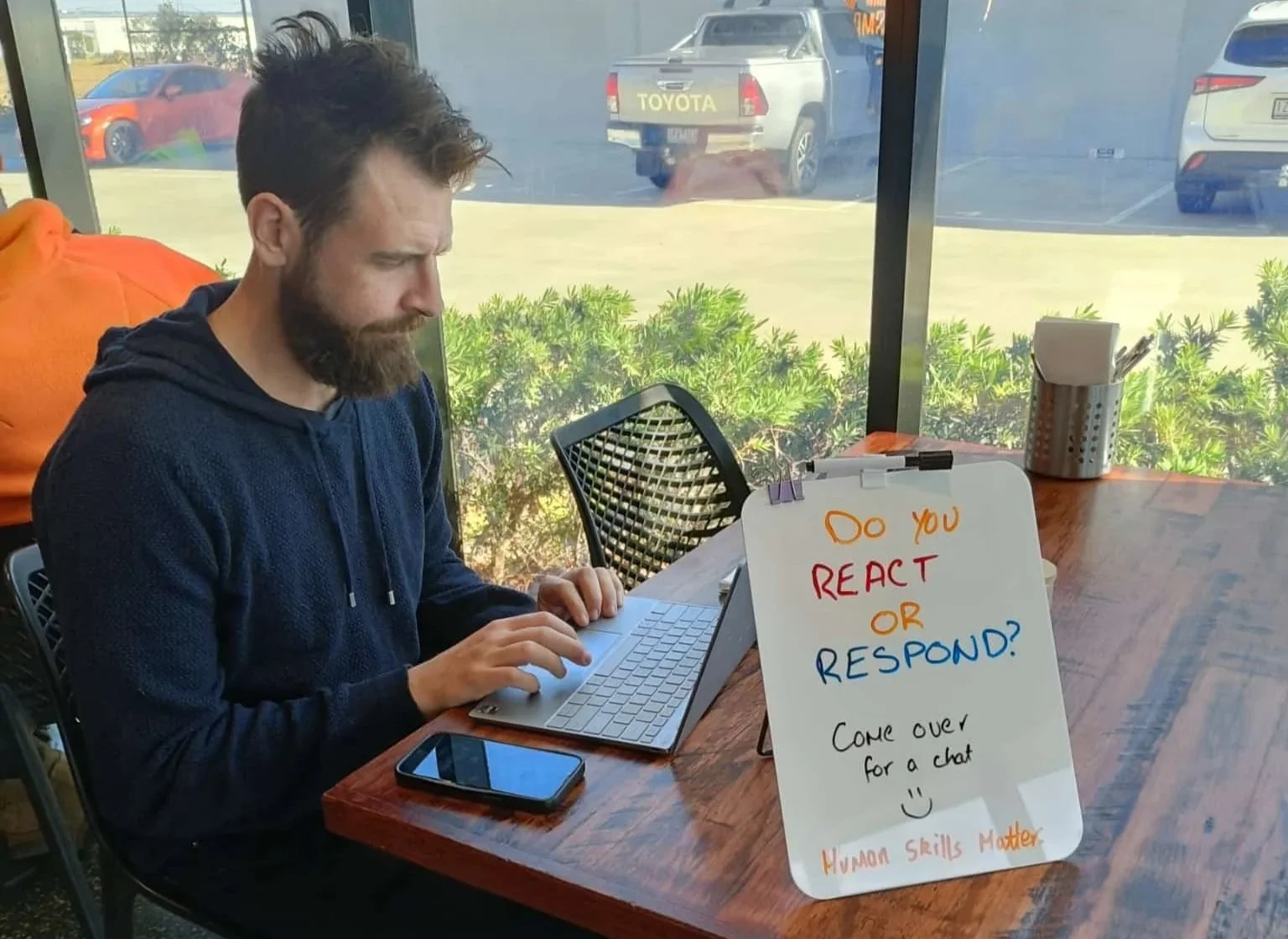
My First Blog (Ever). Why Human Skills Matter More Than We Think.
My first blog… how exciting and terrifying at the same time.
Since launching my business back in January, 2025 I’ve gone through every emotion you can imagine: fear, doubt, excitement, anxiety, anger, and that little voice that says, “Mate, who do you think you are writing a blog?” If you’ve ever hesitated to start something because you didn’t feel ready enough, you’re in good company. This is me ripping the band-aid off. I figured the best place to start is with the beginning… my own human skills journey.
Why now? A colleague once asked why I started running human skills sessions with my team. We spent so much time improving our clinical skills, trade skills, teaching skills… but almost none on communication, emotional intelligence, or confidence under pressure. It went awkwardly quiet for a moment. Then she said: “When you put it that way… yeah, we don’t really do much about it.” That moment stuck with me. Since then I’ve had ideas, doubts, more ideas, more doubts, and eventually I hit that point where you ask yourself,
What’s the worst that would happen if I just tried?
Now I’m almost 40, a dad of 2 and honestly, no one has ever said anything so bad that it wasn’t worth giving something a go. So here we are. The moment everything clicked Back in 2021, I took on the CNS leadership group. Quickly I realised something: People weren’t lacking skill, they were lacking confidence. Challenging conversations, leadership, empathy… these weren’t part of any “competency checklist.” There’s no yearly assessment for emotional intelligence. There’s no curriculum for human skills. Yet these skills are the difference between a good clinician, educator or tradie… and a genuine leader.
What I wish more people understood Emotional intelligence, communication, resilience, motivation — they’re all trainable skills. They’re not personality traits. They’re not magic. They’re not reserved for “good communicators.” If you don’t pick up a guitar and play a whole song perfectly the first time… or walk into a gym and throw 100kg on the bar… why do we expect a difficult conversation to magically go well without practice? Human skills need reps too. And yes, sometimes you’ll get it wrong, and that’s normal. That’s part of the process. One moment I didn’t get it right Early in my Associate Manager role, stress and insecurity got the better of me, and I snapped at a nurse. Nothing dramatic but damaging enough. It hurt our relationship, it dented team morale, and it taught me one of the biggest lessons in leadership:
Pause. Lead with curiosity, not authority.
Trust is built slowly and broken quickly. That moment changed the way I show up for people. What I’m seeing in workplaces everywhere Nursing, childcare, trades, schools; the industries look different, but the challenges are the same. People are exhausted. Communication breaks down. Confidence disappears. Small issues snowball into bigger ones. Most problems don’t come from bad people… they come from people who don’t know how to navigate pressure, conflict, or emotion. Human skills bridge that gap. They make workplaces safer, calmer, clearer, and more connected. One small tool you can use today If you want to grow in any area, pick a skill, share it with someone you trust, and tell them: “I’m practising this. I won’t get it right every time. I want your feedback so I can improve quickly.” That one sentence can completely shift your learning curve.
Why connection matters to me working in emergency care, you see life change in seconds. Families come together when tragedy strikes. People say things they should’ve said months or years earlier. Connection shouldn’t only matter in crisis. The people who seem the most fulfilled are the ones who take a moment to ask a real question, call someone they love just to check in, or pause long enough to truly listen. And sometimes connection saves a life. I’ve seen that first-hand. It’s why I’m doing all of this. What I hope you take away If I can shift your perspective even 1 degree, that’s a win. Try leading with curiosity for one conversation this week. Try pausing for five seconds before you respond. See what changes. Small shifts, over time, lead you somewhere completely different. Where this blog is heading Right now, I just want to share what I’ve learned and why I believe Human Skills Matter. If you’re interested, you can check out my social channels or join my Skool community (it’s free).
This is just the start. Thanks for being here! It honestly means a lot.