
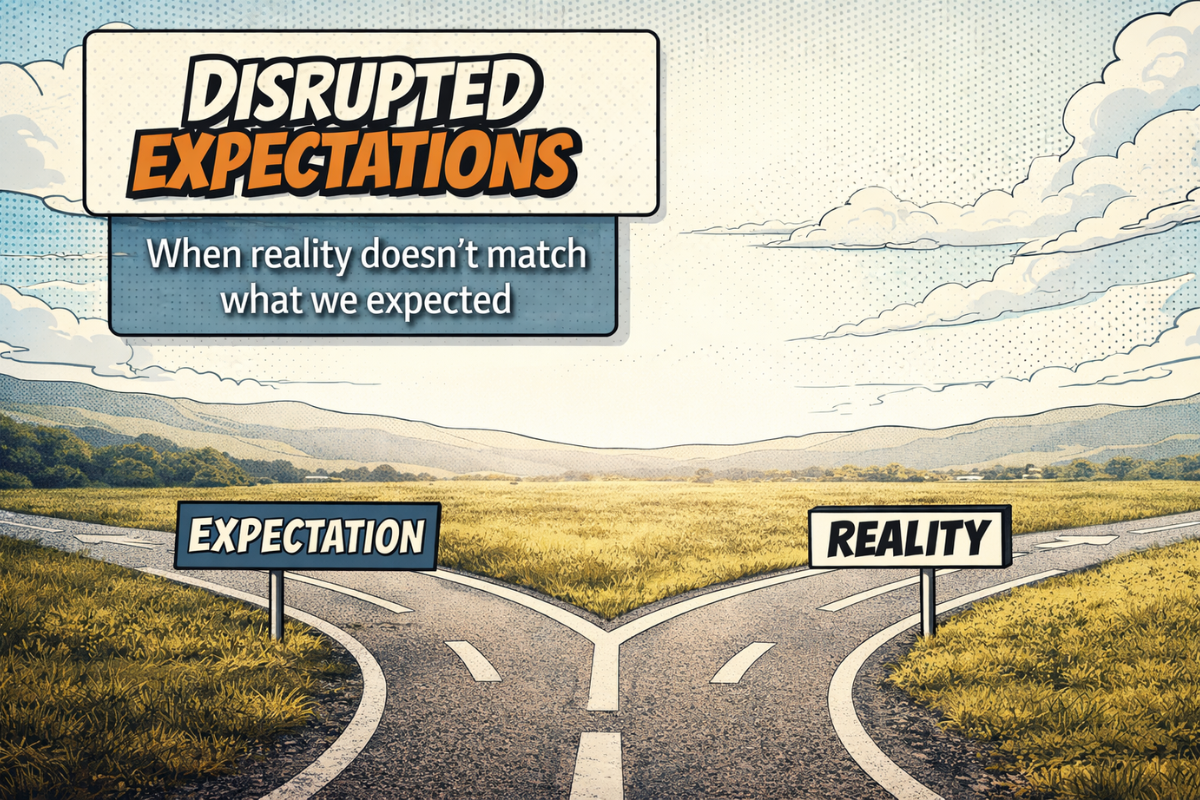
Disrupted Expectations: The Moments That Shape Our Response
Sometimes it’s not what happened that throws us off…
it’s that it didn’t happen the way we expected.
I recently delivered a workshop at a blood donor centre on a topic called Difficult Donors.
In the room were donor staff and their manager — people who show up every day to support others, often in emotional moments.
One of the key challenges they shared was how uncomfortable it can feel when they have to turn a donor away.
From the donor’s perspective, they’ve made the effort to come in, they’re ready to help, and then suddenly… they’re told no.
That moment — right there — is a disrupted expectation.
And as we spoke about it, you could feel a shift in the room.
Not because the situation changed.
But because the understanding did.
What is a disrupted expectation?
At its simplest: A disrupted expectation is when reality doesn’t match what we expected.
It sounds simple.
But it shows up everywhere.
And it often carries emotion with it.
Where this shows up in everyday life
You don’t need to be in a blood donor centre to experience this.
It happens all the time.
A colleague reacts differently than you thought they would
A child doesn’t listen after you’ve clearly explained something
A patient or client responds in a way you didn’t expect
An umpire makes a call that doesn’t go your way
In each of these moments, there’s a gap between what we expected… and what actually happened.
And it’s in that gap where emotion lives.
Frustration.
Confusion.
Disappointment.
Sometimes even anger.
Why these moments matter more than we think
The disrupted expectation itself isn’t the problem.
Our reaction to it is.
Most of the time, we don’t realise what’s just happened.
We go straight into:
reaction
judgement
assumption
And before we know it, a small moment turns into a bigger one.
A moment that caught me off guard
I remember taking my son to his community kinder.
We’d been told his kinder day was still going ahead, even though there were talks of a curriculum day at the deaf school.
I drove him there after an appointment, got to the door… and was met with a confused staff member.
“Why are you here?”
Turns out, the kinder was open for community kids, but not for the deaf and hard-of-hearing children, as their teachers weren’t present.
Expectation: Kinder is on.
Reality: Kinder is not on.
Disrupted expectation.
It threw the day off.
It created confusion.
But after a moment to pause, I was able to reframe it.
We turned it into a dad-and-son day.
Caught up with my wife for lunch.
Went for a bike ride.
Slowed things down.
Same situation.
Different response.
So, what can we actually do in these moments?
Here are three simple tools you can use straight away.
1. Your first word should be a breath
Before reacting… pause.
Even just for a second.
That breath creates space between what just happened… and how you respond
It’s small.
But it changes everything.
2. Choose curiosity over judgement
Instead of:
“Why would they do that?”
“That makes no sense”
Try:
“What might be going on here?”
“What am I missing?”
Curiosity lowers emotion.
Judgement fuels it.
3. Reframe the situation
Ask yourself:
“Is there another way to look at this?”
Sometimes there is.
Sometimes there isn’t.
But even asking the question helps shift your mindset.
Just like that day with my son — the situation didn’t change, but the outcome did.
Why this matters
Disrupted expectations happen to everyone.
Every day.
In small moments.
In big moments.
At work.
At home.
In sport.
In life.
We can’t control when they happen.
But we can control how we respond.
And often, that response shapes everything that comes next.
A reflective pause
When was the last time your expectations were disrupted?
What did you do in that moment?
And what would have changed if you had paused, got curious, or looked at it differently?
If you feel comfortable, share your experience, you never know who it might help.
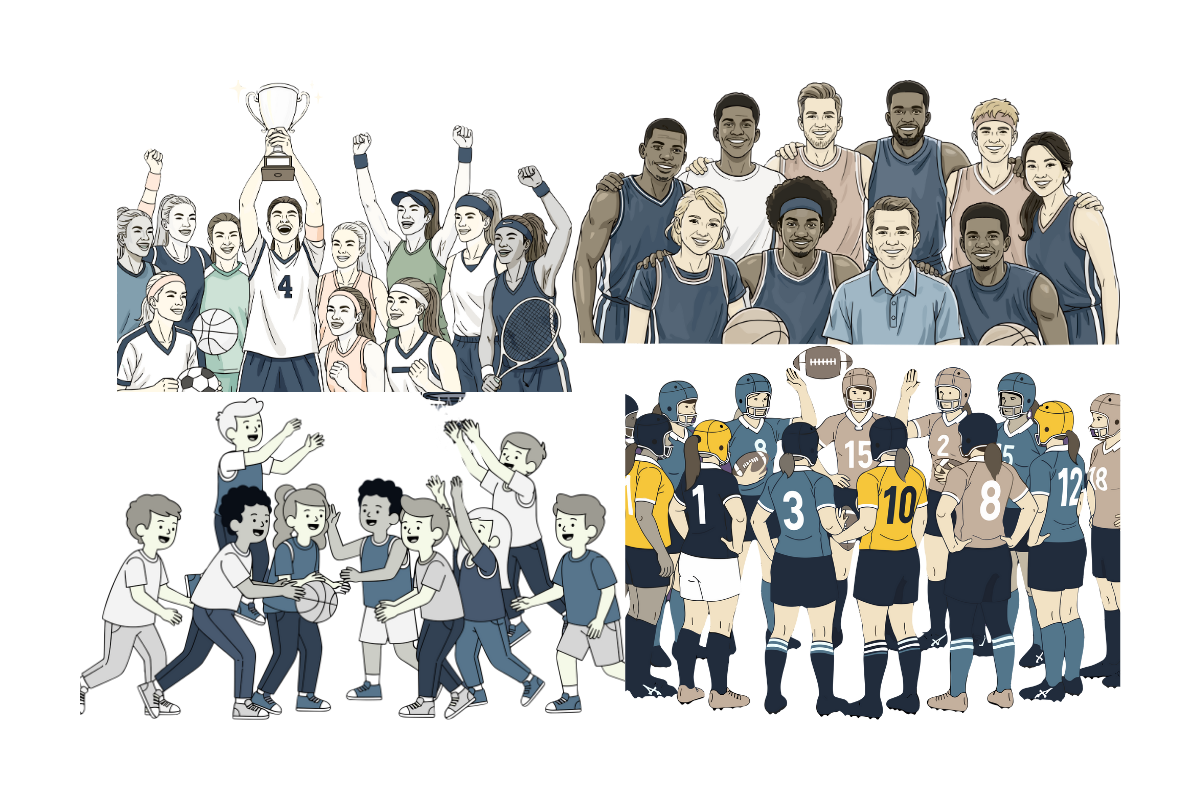
Sporting Clubs, Leadership, and the Human Skills That Shape Communities
I’ve grown up in and around sporting clubs.
Some of my earliest memories are tied to clubrooms, muddy boots, shared laughs, and the sense of belonging that comes from being part of something bigger than yourself.
Sporting clubs are special places.
They bring together people from different backgrounds, ages, and life experiences, and give them a shared identity. For many kids, teenagers, and even adults, a club becomes a second home.
They allow people who’ve come from different places and different walks of life to feel like they belong.
And that’s exactly why sporting clubs matter so much.
The influence senior leaders hold
One of the most powerful things about sporting clubs is that young people are always watching.
They watch how senior players speak to teammates.
They watch how coaches respond under pressure.
They watch how committee members, parents, and supporters behave on the sidelines.
Whether we like it or not, senior players, coaches, and long-standing club leaders are shaping what is seen as acceptable behaviour.
Not through speeches.
But through what they tolerate.
What they excuse.
And what they quietly ignore.
This is where responsibility really sits.
When leadership isn’t emotionally aware
Here’s where it gets uncomfortable.
What happens when the people in leadership positions aren’t emotionally aware themselves?
When:
abuse toward umpires is brushed off as “passion”
discriminatory comments are minimised
white-line fever crosses the line
anger is normalised because “that’s just competitive sport”
Who calls that out?
And more importantly…
What are younger players learning in those moments?
Sport is emotional. It should be.
But emotional doesn’t have to mean unsafe, disrespectful, or harmful.
What does calling someone out with care actually look like?
Calling someone out doesn’t have to be about saying, “You’re wrong.”
Often, it’s as simple as using the club’s own values and standards.
Something like:
“Hey, that’s not how we do things around here.”
It sends a clear message:
To be part of this club, certain behaviours aren’t acceptable.
And when people on the outside see that line being held, it builds trust.
It shows the club stands for something.
It strengthens culture instead of quietly weakening it.
When silence causes more damage
We’ve all seen it.
A parent losing it at an umpire.
A player abusing a teammate after a mistake.
A spectator pulling their child aside for a spray.
Most of the time, people turn a blind eye.
We label it as, “That’s just how they are.”
Or we avoid it because we think, “It could get ugly.”
But silence can do more damage in the long run.
Sometimes, a simple question like:
“Hey, are you OK?” can change the entire direction of a situation.
It shows curiosity instead of confrontation.
Care instead of control.
And it opens the door to a conversation instead of a standoff.
The behaviours that stick with you
I grew up in cricket and baseball clubs.
One thing that’s always stayed with me is post-game presentations when I was about 11. Coaches would stand up and talk about the game, focusing on what the team did well. At my junior cricket club we’d have a player-of-the-match award, but it wasn’t always about runs or wickets.
Sometimes it was for:
positivity
sportsmanship
mindset
effort
And yes, the good old McDonald’s voucher.
Parents would celebrate with the kids.
Kids would talk about their game.
Confidence grew.
I’m nearly 40 now, and those are still the memories that stand out.
I think that’s what most of us want for our kids.
And when things don’t go so well
Last season, I went to my nephew’s under-9s footy game.
Midway through, the umpire made a call. It looked like one of those junior footy decisions made to help kids learn and stay involved.
A parent from the opposing team went ballistic.
The umpire stopped the game and said the behaviour wasn’t acceptable and that he would forfeit the match if it continued.
What impressed me most was what happened next.
Both coaches backed the umpire.
Leaders from both clubs supported the decision.
The parent eventually stepped away, settled down, and after the game, apologised to the group.
The coach shook his hand and thanked him for it.
That moment mattered.
Not because it was perfect.
But because the line was held, and the situation was repaired.
How small habits shift club culture
One small behaviour shift can change the tone of an entire club.
It often only takes two or three respected leaders to say:
“This is what we accept here. And this is what we don’t.”
My own senior cricket club president does this well. He’s a police officer by trade and has very clear boundaries about behaviour. Long-time members of the club back him, and because of that, standards hold.
Culture doesn’t change through policies alone.
It changes through what people model and protect.
A reflective pause
Sporting clubs have an incredible ability to build confident, connected, resilient human beings.
But that only happens when the people with influence are willing to look at their own behaviour first.
Not to be perfect.
But to be aware.
So here’s a question worth sitting with:
If a young player learned how to behave by watching the adults at your club…
what would they learn about respect, emotion, and belonging?
Because in sporting communities, leadership isn’t just about winning games.
It’s about what people carry with them long after the final siren.

Emotional Intelligence Isn’t Magic. It’s Trainable.
Emotional intelligence often gets talked about like it’s a personality trait, something you’re either born with or not.
It’s not.
Emotional intelligence (EQ), communication, resilience, motivation, these are learned skills. They grow the same way physical strength does: with reps.
No one walks into the gym and deadlifts 100kg on day one.
No one picks up a guitar and plays a full song perfectly the first try.
Yet people walk into a difficult conversation and expect it to go smoothly, even if they’ve never practised how to:
regulate emotion
listen properly
challenge respectfully
communicate clearly under pressure
That expectation sets people up to fail.
Human skills need the same respect we give “hard skills.”
They need time, repetition, feedback, failure, and a growth mindset.
So what does emotional intelligence actually mean?
At its core, emotional intelligence is the ability to:
recognise what you’re feeling
understand how it’s influencing your behaviour
manage it well enough to respond rather than react
It’s not about being calm all the time.
It’s about noticing what’s happening before things escalate.
What’s the most basic element of emotional intelligence?
Awareness.
Before regulation.
Before empathy.
Before communication.
Awareness of:
your tone
your body language
your internal state
the impact you’re having on others
If you don’t notice it, you can’t change it.
What does emotional intelligence look like in real life?
Let’s make this practical.
For tradies
A job is behind schedule. Pressure’s high. Tempers are short.
Low EQ looks like snapping, blaming, or shutting down communication.
High EQ looks like recognising frustration early and saying:
“I’m getting frustrated here, let’s slow this down so we don’t miss something.”
That one sentence can prevent mistakes, rework, safety issues, and damaged working relationships.
For childcare educators
You’re managing children, families, routines, regulations all while running on limited energy.
Low EQ looks like bottling stress until burnout hits.
High EQ looks like noticing overwhelm early and asking for support before it spills into interactions with children or colleagues.
That protects relationships and wellbeing.
For healthcare workers
High-stakes environments. Emotionally charged situations. No pause button.
Low EQ isn’t about being a bad clinician, it’s about being human under pressure.
High EQ is recognising when stress is driving your responses and grounding yourself, so communication stays clear, calm, and safe.
That skill can change outcomes for patients, families, and teams.
For sporting clubs
Games are intense. Emotions run high. Decisions happen fast, often in front of teammates, opponents, umpires, and supporters.
Low EQ shows up as:
blowing up at an umpire
snapping at teammates
carrying frustration into the next play
letting one mistake spiral into many
High EQ looks like:
recognising the emotional spike and resetting quickly
refocusing on the next contest instead of the last mistake
communicating calmly with teammates under pressure
modelling composure, especially when others are watching
In club environments, emotional intelligence doesn’t just affect performance, it shapes culture.
Players with strong human skills help create teams that stay connected when things aren’t going well, support each other through losses, and hold standards without tearing each other down.
That’s leadership, whether you wear the captain’s armband or not
Why this matters across every industry?
Most people don’t struggle with the technical parts of their job.
They struggle with the human parts.
And yet, we rarely practise them.
We don’t rehearse difficult conversations.
We don’t train emotional regulation.
We don’t normalise feedback on communication.
Then we wonder why things fall apart under pressure.
You’re allowed to get it wrong.
You’re expected to get it wrong.
You just need to keep trying, with intention.
That’s how emotional intelligence is built.
A question worth sitting with
If emotional intelligence were trained the same way technical skills are in your industry…
What would improve first?
Safety?
Communication?
Culture?
Wellbeing?