
A Moment to Pause, Reflect, and Say Thank You
Pause Reflect and Thank-You
As the year comes to a close, I wanted to take a moment to slow things down.
Not to rush into goals, plans, or big declarations for next year, but to pause and reflect on what’s already happened.
If you’ve stopped by and read one of my blogs this year, thank you.
Truly. It means more than you probably realise.
If something I’ve written resonated with you and you’ve shared it with someone else, that means the world to me. These reflections only matter if they help someone pause, think, or feel a little more connected.
So before the year wraps up, here’s a look back at the wins, the learnings, and what I’m carrying forward.
The Wins Worth Noticing
This year, I created Dan Hall Co, something that started as a quiet idea and slowly became real.
I was fortunate to deliver Human Skills workshops to over 250 people across the Melbourne area, creating space for conversations around communication, emotional intelligence, leadership, and connection. Seeing people pause mid-session, reflect, and have those “ah-huh” moments never gets old. That’s the part of the work that lights me up.
One moment that made me especially proud happened during an Emerging Leaders Day.
While I was introducing the session, a young nurse raised her hand and said, very honestly:
“I don’t think I should be here. I’m not a leader.”
I walked over and asked her a simple question.
“When a patient deteriorates in your care and you press the alarm for help, and everyone arrives… who do they turn to first?”
She paused.
Then, a little sheepishly, she replied,
“Me?”
I smiled and said,
“So in that moment, you were the leader.”
“I guess so?”
“So why wouldn’t today be for you? You’re exactly the person who should be here.”
Her face lit up.
From that moment on, she flourished. She leaned into the activities, contributed openly, and genuinely enjoyed the day. At the end, she came up to thank me for what she called the “pep talk.”
It was a reminder that so many people are already leading, quietly and responsibly, without ever being told they are.
Leadership isn’t always loud.
Sometimes it’s simply being the one people turn to when it matters.
Another highlight this year was working with an electrician who initially struggled to see the value in so-called “soft skills.” Over time, that shifted. He began noticing his emotional responses, communicating more clearly, and even improving how he showed up at home with his wife, kids, and colleagues. Watching skills transfer from work into real life is incredibly rewarding.
I also created a Skool community, bringing together people from around the world who care about connection, communication, and growth. Slowly and intentionally, we’re building a culture focused on one simple idea: Make Human Skills Matter.
The Learnings That Shaped Me
Creating your own business is hard work.
All the little things you don’t think about at the start show up very quickly. Systems, structure, energy, doubt, it all becomes real. But it’s also been one of the most rewarding experiences of my career. I’ve developed skills I never expected to need, and I’ve loved every minute of it, especially witnessing those “ah-huh” moments in clients and audiences.
Motivation hasn’t always been easy.
Some days, starting a draft email felt like a win. Some days, even opening the laptop, or getting out of bed took effort. What I’ve learned is that making tasks smaller matters. One sentence. One action. One ticked box. Most of the time, that small step creates momentum. And even when it doesn’t, it still counts.
Consistency hasn’t meant giving 100% every day.
There were days where I only had 20% to give, and that’s okay. Being human means some days are lighter than others. Doing one thing is still progress. It’s one less thing for tomorrow. Showing up a little each day accumulates into something far bigger over time, you just have to start.
The Support That Carried Me Through
I’d be remiss not to acknowledge the person who supported me most when things felt heavy.
My wife, Nicole.
Over the past 12 months, she has been there in every way, reading drafts of my posts, offering encouragement, grounding me when doubt crept in, and putting up with me on days when life felt tough.
Like most families, we’ve been tested at times while balancing kids, work, business, family life, and our dogs. It hasn’t always been smooth. But we’ve worked through it together.
Her support has been steady, honest, and deeply human and I’m incredibly grateful.
Thank you, honey. I love you.
Looking Ahead to What Matters Most
Next year, my biggest goal is more family time.
I’ve reshaped both my nursing work and my business so I can be more present at home. I once had a senior colleague tell me his kids remembered him always working, and that stayed with me.
I don’t want that for my kids.
I want them to remember morning coffees before school,. days at the footy, ice-cream dates, the good stuff.
At the same time, Making Human Skills Matter remains something I’m deeply passionate about.
Since COVID, many of us have become more inward. More hesitant. More worried about saying the wrong thing. But relationships don’t grow without curiosity. Connection doesn’t happen if we don’t feel comfortable asking a question.
And yes, that includes you reading this now.
I want to build a relationship with you. To share moments, reflections, lessons, and stories that help us all show up a little more human, at work, at home, and everywhere in between.
A Gentle Invitation to Reflect
Before the year ends, maybe pause and ask yourself:
What’s one win from this year you haven’t acknowledged yet?
What challenged you but helped you grow?
Where did you show up, even when it was hard?
What do you want the people closest to you to remember about this season of your life?
You don’t need perfect answers.
Honest ones are enough.
Thank you for being here.
Thank you for reading.
And if you think this might resonate with someone else, feel free to share it with them.
HAPPY NEW YEAR EVERYONE, HERE IS FOR AN EXCITING 2026!
One Sentence Can Change a Whole Conversation
Sitting conversation
I was working in charge in the Emergency Department when I stepped away briefly to drop medications at the hospital pharmacy.
Nothing unusual about that.
While I was there, an elderly man stopped me to compliment my beard.
He had one too, a little fuller, whiter, but he wore it with pride.
That small comment turned into a five-minute conversation.
He’d recently had a knee replacement and was optimistic about moving without pain again. You could hear the hope in his voice. As we spoke, he shared that he was a widower. His wife had passed away seven years earlier.
Before we parted, I asked him a simple question:
“If you could describe your wife in one sentence, what would you say?”
He paused.
Just for a moment.
Then his face softened into the kind of smile you don’t forget, and he said:
“My wife was a saint.”
That was it.
But it changed everything.
He went on to talk about her with warmth, joy, and gratitude. You could feel the love still very much alive in the room. A sentence had opened a door to meaning, memory, and connection.
And then, just like that, we both went on with our day.
Why This Moment Matters
What struck me wasn’t the length of the conversation.
It was the quality of it.
That one sentence didn’t just answer a question, it shifted the emotional tone entirely. It turned a casual chat into a moment of human connection.
This is something I see again and again in my work.
We often think meaningful conversations require:
The right words
Perfect timing
Long explanations
But often, it’s one thoughtful sentence, or one curious question that makes all the difference.
The Power of a Single Sentence
One sentence can:
Lower someone’s guard
Invite reflection instead of defensiveness
Turn small talk into real talk
Help someone feel seen, not rushed
In busy environments like hospitals, worksites, classrooms, offices, we don’t always have time for long conversations.
But we do have time for intention.
A single, well-placed question.
A sentence spoken with genuine curiosity.
A pause long enough to listen.
Those moments matter more than we realise.
This Is What “Human Skills” Look Like
Human skills aren’t complicated frameworks or polished scripts.
They’re moments like this:
Choosing curiosity over autopilot
Asking a question that invites meaning
Being present enough to listen to the answer
These skills don’t just improve communication.
They improve connection at work, at home, everywhere.
A Question for You
Think about your own conversations this week.
What’s one sentence you could ask that might change the tone?
Who in your life might appreciate being invited to share a story?
Where could you slow down just enough to listen?
Sometimes, that’s all it takes.
Join the Conversation
I shared this story inside my Make Human Skills Matter community on Skool, and the response was powerful. People reflected, shared their own stories, and talked about the moments that stayed with them long after the conversation ended.
If you enjoy reflecting on communication, connection, and the small human moments that make a big difference, you’re welcome to join us here
No pressure. Just good conversations with people who care about being a little more human.
The Missing Curriculum: Why Human Skills Matter in Every Industry
The missing piece
Across nursing, childcare, trades, teaching etc. the details change, but the pattern doesn’t.
People know their job. What they often struggle with is the people side of the job.
Difficult conversations.
=> Conflict.
=> Burnout.
=> Misunderstandings.
=> Miscommunication.
=> Emotional blowouts.
These aren’t “soft” issues. They’re the issues that affect safety, morale, productivity, and wellbeing.
And yet, when you look closely, there’s a noticeable gap:
No competency check for empathy.
No yearly assessment for communication.
No refresher training for emotional intelligence.
Human skills have quietly taken a back seat, even though they’re the gears that keep teams functioning, especially under pressure.
What’s interesting is this: when people struggle with these areas, we often personalise it.
They’re not great with people.
They don’t handle feedback well.
They avoid conflict.
But what if the issue isn’t the person?
What if it’s the absence of practice?
We don’t expect clinical skills, trade skills, or technical knowledge to improve without training, repetition, and feedback. Yet somehow, we expect human skills to develop automatically, often in the most high-pressure moments.
That’s not a character flaw.
It’s a training gap.
And slowly, workplaces are starting to recognise this. Not as a “nice to have,” but as something essential to safety, connection, and sustainability.
So here’s the question worth sitting with:
If human skills were given the same attention as technical skills in your workplace, what do you think would improve first?
Communication?
Confidence?
Culture?
Wellbeing?
Even noticing the gap is a powerful place to start.
How I Found My Voice in Human Skills Coaching
My human skills journey didn’t start with a course, a book, or a lightbulb moment. It started with frustration.
Back in 2021, I stepped into leading the CNS group. Amazing clinicians. Smart. Skilled. Dedicated. But when it came to handling challenging conversations, confidence was close to zero. And it wasn’t their fault.
They were expected to lead… but never given a safe place to practice the skills that leadership actually requires: empathy, self-awareness and regulation, clarity under pressure, dealing with conflict.
It's funny, we obsess over clinical, trade, or teaching skills. We’ll sit through yearly competencies, redo training, study guidelines. But human skills? They’re expected to magically develop on their own.
The truth is, they don’t.
That gap is where everything changed for me. I realised no one was teaching these skills. Not properly. Not consistently. Not safely.
So, I started doing it myself.
And, honestly, I had no idea it would lead me here, writing a blog, running workshops, coaching people from different industries, and trying to help others build confidence under pressure.
This is the beginning of my next chapter. I’m glad you’re here for the ride.
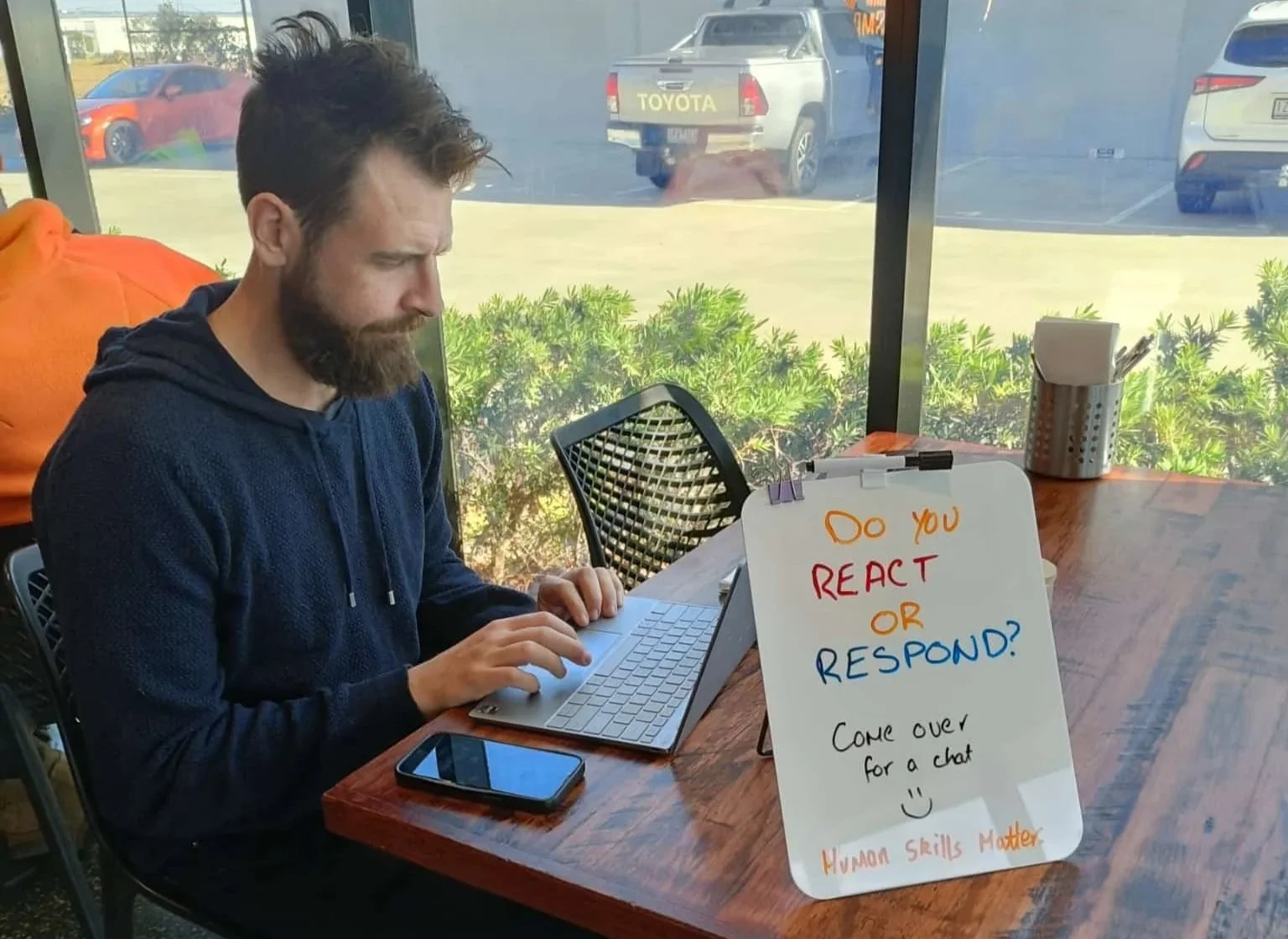
My First Blog (Ever). Why Human Skills Matter More Than We Think.
My first blog… how exciting and terrifying at the same time.
Since launching my business back in January, 2025 I’ve gone through every emotion you can imagine: fear, doubt, excitement, anxiety, anger, and that little voice that says, “Mate, who do you think you are writing a blog?” If you’ve ever hesitated to start something because you didn’t feel ready enough, you’re in good company. This is me ripping the band-aid off. I figured the best place to start is with the beginning… my own human skills journey.
Why now? A colleague once asked why I started running human skills sessions with my team. We spent so much time improving our clinical skills, trade skills, teaching skills… but almost none on communication, emotional intelligence, or confidence under pressure. It went awkwardly quiet for a moment. Then she said: “When you put it that way… yeah, we don’t really do much about it.” That moment stuck with me. Since then I’ve had ideas, doubts, more ideas, more doubts, and eventually I hit that point where you ask yourself,
What’s the worst that would happen if I just tried?
Now I’m almost 40, a dad of 2 and honestly, no one has ever said anything so bad that it wasn’t worth giving something a go. So here we are. The moment everything clicked Back in 2021, I took on the CNS leadership group. Quickly I realised something: People weren’t lacking skill, they were lacking confidence. Challenging conversations, leadership, empathy… these weren’t part of any “competency checklist.” There’s no yearly assessment for emotional intelligence. There’s no curriculum for human skills. Yet these skills are the difference between a good clinician, educator or tradie… and a genuine leader.
What I wish more people understood Emotional intelligence, communication, resilience, motivation — they’re all trainable skills. They’re not personality traits. They’re not magic. They’re not reserved for “good communicators.” If you don’t pick up a guitar and play a whole song perfectly the first time… or walk into a gym and throw 100kg on the bar… why do we expect a difficult conversation to magically go well without practice? Human skills need reps too. And yes, sometimes you’ll get it wrong, and that’s normal. That’s part of the process. One moment I didn’t get it right Early in my Associate Manager role, stress and insecurity got the better of me, and I snapped at a nurse. Nothing dramatic but damaging enough. It hurt our relationship, it dented team morale, and it taught me one of the biggest lessons in leadership:
Pause. Lead with curiosity, not authority.
Trust is built slowly and broken quickly. That moment changed the way I show up for people. What I’m seeing in workplaces everywhere Nursing, childcare, trades, schools; the industries look different, but the challenges are the same. People are exhausted. Communication breaks down. Confidence disappears. Small issues snowball into bigger ones. Most problems don’t come from bad people… they come from people who don’t know how to navigate pressure, conflict, or emotion. Human skills bridge that gap. They make workplaces safer, calmer, clearer, and more connected. One small tool you can use today If you want to grow in any area, pick a skill, share it with someone you trust, and tell them: “I’m practising this. I won’t get it right every time. I want your feedback so I can improve quickly.” That one sentence can completely shift your learning curve.
Why connection matters to me working in emergency care, you see life change in seconds. Families come together when tragedy strikes. People say things they should’ve said months or years earlier. Connection shouldn’t only matter in crisis. The people who seem the most fulfilled are the ones who take a moment to ask a real question, call someone they love just to check in, or pause long enough to truly listen. And sometimes connection saves a life. I’ve seen that first-hand. It’s why I’m doing all of this. What I hope you take away If I can shift your perspective even 1 degree, that’s a win. Try leading with curiosity for one conversation this week. Try pausing for five seconds before you respond. See what changes. Small shifts, over time, lead you somewhere completely different. Where this blog is heading Right now, I just want to share what I’ve learned and why I believe Human Skills Matter. If you’re interested, you can check out my social channels or join my Skool community (it’s free).
This is just the start. Thanks for being here! It honestly means a lot.