
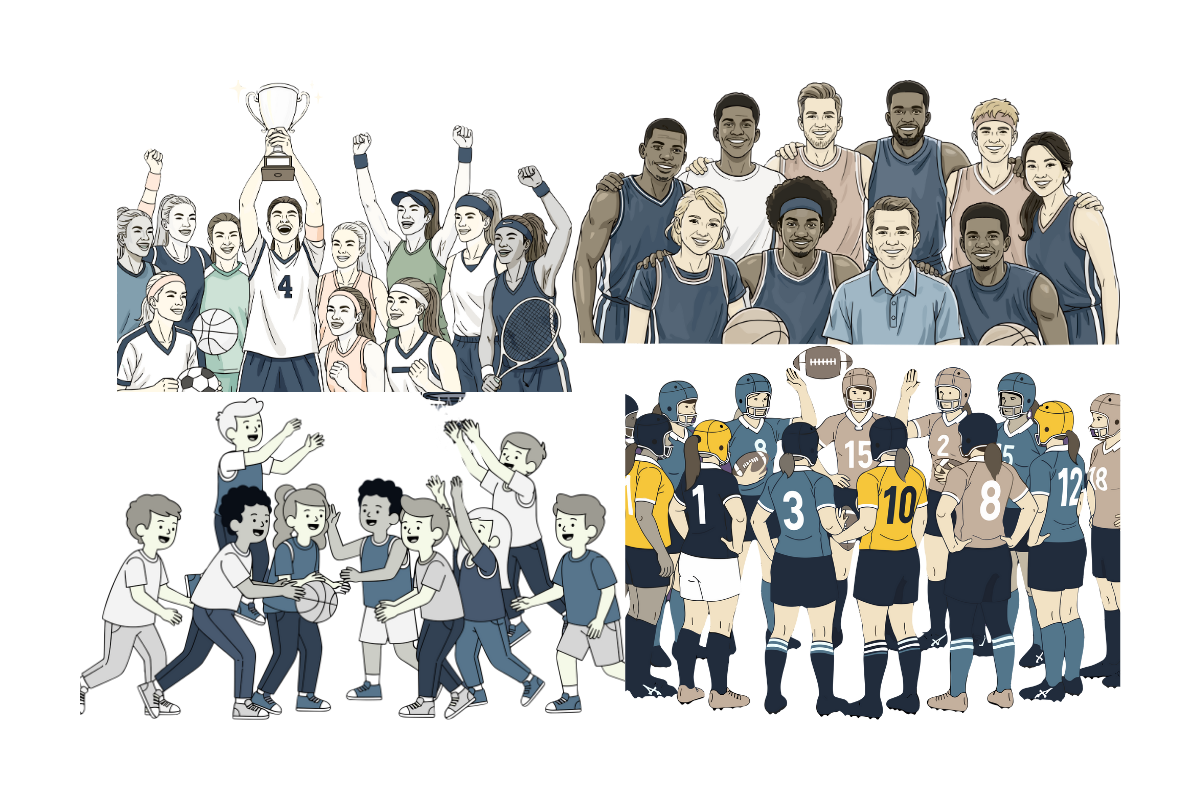
Sporting Clubs, Leadership, and the Human Skills That Shape Communities
I’ve grown up in and around sporting clubs.
Some of my earliest memories are tied to clubrooms, muddy boots, shared laughs, and the sense of belonging that comes from being part of something bigger than yourself.
Sporting clubs are special places.
They bring together people from different backgrounds, ages, and life experiences, and give them a shared identity. For many kids, teenagers, and even adults, a club becomes a second home.
They allow people who’ve come from different places and different walks of life to feel like they belong.
And that’s exactly why sporting clubs matter so much.
The influence senior leaders hold
One of the most powerful things about sporting clubs is that young people are always watching.
They watch how senior players speak to teammates.
They watch how coaches respond under pressure.
They watch how committee members, parents, and supporters behave on the sidelines.
Whether we like it or not, senior players, coaches, and long-standing club leaders are shaping what is seen as acceptable behaviour.
Not through speeches.
But through what they tolerate.
What they excuse.
And what they quietly ignore.
This is where responsibility really sits.
When leadership isn’t emotionally aware
Here’s where it gets uncomfortable.
What happens when the people in leadership positions aren’t emotionally aware themselves?
When:
abuse toward umpires is brushed off as “passion”
discriminatory comments are minimised
white-line fever crosses the line
anger is normalised because “that’s just competitive sport”
Who calls that out?
And more importantly…
What are younger players learning in those moments?
Sport is emotional. It should be.
But emotional doesn’t have to mean unsafe, disrespectful, or harmful.
What does calling someone out with care actually look like?
Calling someone out doesn’t have to be about saying, “You’re wrong.”
Often, it’s as simple as using the club’s own values and standards.
Something like:
“Hey, that’s not how we do things around here.”
It sends a clear message:
To be part of this club, certain behaviours aren’t acceptable.
And when people on the outside see that line being held, it builds trust.
It shows the club stands for something.
It strengthens culture instead of quietly weakening it.
When silence causes more damage
We’ve all seen it.
A parent losing it at an umpire.
A player abusing a teammate after a mistake.
A spectator pulling their child aside for a spray.
Most of the time, people turn a blind eye.
We label it as, “That’s just how they are.”
Or we avoid it because we think, “It could get ugly.”
But silence can do more damage in the long run.
Sometimes, a simple question like:
“Hey, are you OK?” can change the entire direction of a situation.
It shows curiosity instead of confrontation.
Care instead of control.
And it opens the door to a conversation instead of a standoff.
The behaviours that stick with you
I grew up in cricket and baseball clubs.
One thing that’s always stayed with me is post-game presentations when I was about 11. Coaches would stand up and talk about the game, focusing on what the team did well. At my junior cricket club we’d have a player-of-the-match award, but it wasn’t always about runs or wickets.
Sometimes it was for:
positivity
sportsmanship
mindset
effort
And yes, the good old McDonald’s voucher.
Parents would celebrate with the kids.
Kids would talk about their game.
Confidence grew.
I’m nearly 40 now, and those are still the memories that stand out.
I think that’s what most of us want for our kids.
And when things don’t go so well
Last season, I went to my nephew’s under-9s footy game.
Midway through, the umpire made a call. It looked like one of those junior footy decisions made to help kids learn and stay involved.
A parent from the opposing team went ballistic.
The umpire stopped the game and said the behaviour wasn’t acceptable and that he would forfeit the match if it continued.
What impressed me most was what happened next.
Both coaches backed the umpire.
Leaders from both clubs supported the decision.
The parent eventually stepped away, settled down, and after the game, apologised to the group.
The coach shook his hand and thanked him for it.
That moment mattered.
Not because it was perfect.
But because the line was held, and the situation was repaired.
How small habits shift club culture
One small behaviour shift can change the tone of an entire club.
It often only takes two or three respected leaders to say:
“This is what we accept here. And this is what we don’t.”
My own senior cricket club president does this well. He’s a police officer by trade and has very clear boundaries about behaviour. Long-time members of the club back him, and because of that, standards hold.
Culture doesn’t change through policies alone.
It changes through what people model and protect.
A reflective pause
Sporting clubs have an incredible ability to build confident, connected, resilient human beings.
But that only happens when the people with influence are willing to look at their own behaviour first.
Not to be perfect.
But to be aware.
So here’s a question worth sitting with:
If a young player learned how to behave by watching the adults at your club…
what would they learn about respect, emotion, and belonging?
Because in sporting communities, leadership isn’t just about winning games.
It’s about what people carry with them long after the final siren.
The Missing Curriculum: Why Human Skills Matter in Every Industry
The missing piece
Across nursing, childcare, trades, teaching etc. the details change, but the pattern doesn’t.
People know their job. What they often struggle with is the people side of the job.
Difficult conversations.
=> Conflict.
=> Burnout.
=> Misunderstandings.
=> Miscommunication.
=> Emotional blowouts.
These aren’t “soft” issues. They’re the issues that affect safety, morale, productivity, and wellbeing.
And yet, when you look closely, there’s a noticeable gap:
No competency check for empathy.
No yearly assessment for communication.
No refresher training for emotional intelligence.
Human skills have quietly taken a back seat, even though they’re the gears that keep teams functioning, especially under pressure.
What’s interesting is this: when people struggle with these areas, we often personalise it.
They’re not great with people.
They don’t handle feedback well.
They avoid conflict.
But what if the issue isn’t the person?
What if it’s the absence of practice?
We don’t expect clinical skills, trade skills, or technical knowledge to improve without training, repetition, and feedback. Yet somehow, we expect human skills to develop automatically, often in the most high-pressure moments.
That’s not a character flaw.
It’s a training gap.
And slowly, workplaces are starting to recognise this. Not as a “nice to have,” but as something essential to safety, connection, and sustainability.
So here’s the question worth sitting with:
If human skills were given the same attention as technical skills in your workplace, what do you think would improve first?
Communication?
Confidence?
Culture?
Wellbeing?
Even noticing the gap is a powerful place to start.
How I Found My Voice in Human Skills Coaching
My human skills journey didn’t start with a course, a book, or a lightbulb moment. It started with frustration.
Back in 2021, I stepped into leading the CNS group. Amazing clinicians. Smart. Skilled. Dedicated. But when it came to handling challenging conversations, confidence was close to zero. And it wasn’t their fault.
They were expected to lead… but never given a safe place to practice the skills that leadership actually requires: empathy, self-awareness and regulation, clarity under pressure, dealing with conflict.
It's funny, we obsess over clinical, trade, or teaching skills. We’ll sit through yearly competencies, redo training, study guidelines. But human skills? They’re expected to magically develop on their own.
The truth is, they don’t.
That gap is where everything changed for me. I realised no one was teaching these skills. Not properly. Not consistently. Not safely.
So, I started doing it myself.
And, honestly, I had no idea it would lead me here, writing a blog, running workshops, coaching people from different industries, and trying to help others build confidence under pressure.
This is the beginning of my next chapter. I’m glad you’re here for the ride.